


Makeup Brush Materials & Craftsmanship
Published: 路 XIANCAI
Explore natural and synthetic bristles, five common handle materials, and the seven production stages behind a finished makeup brush.
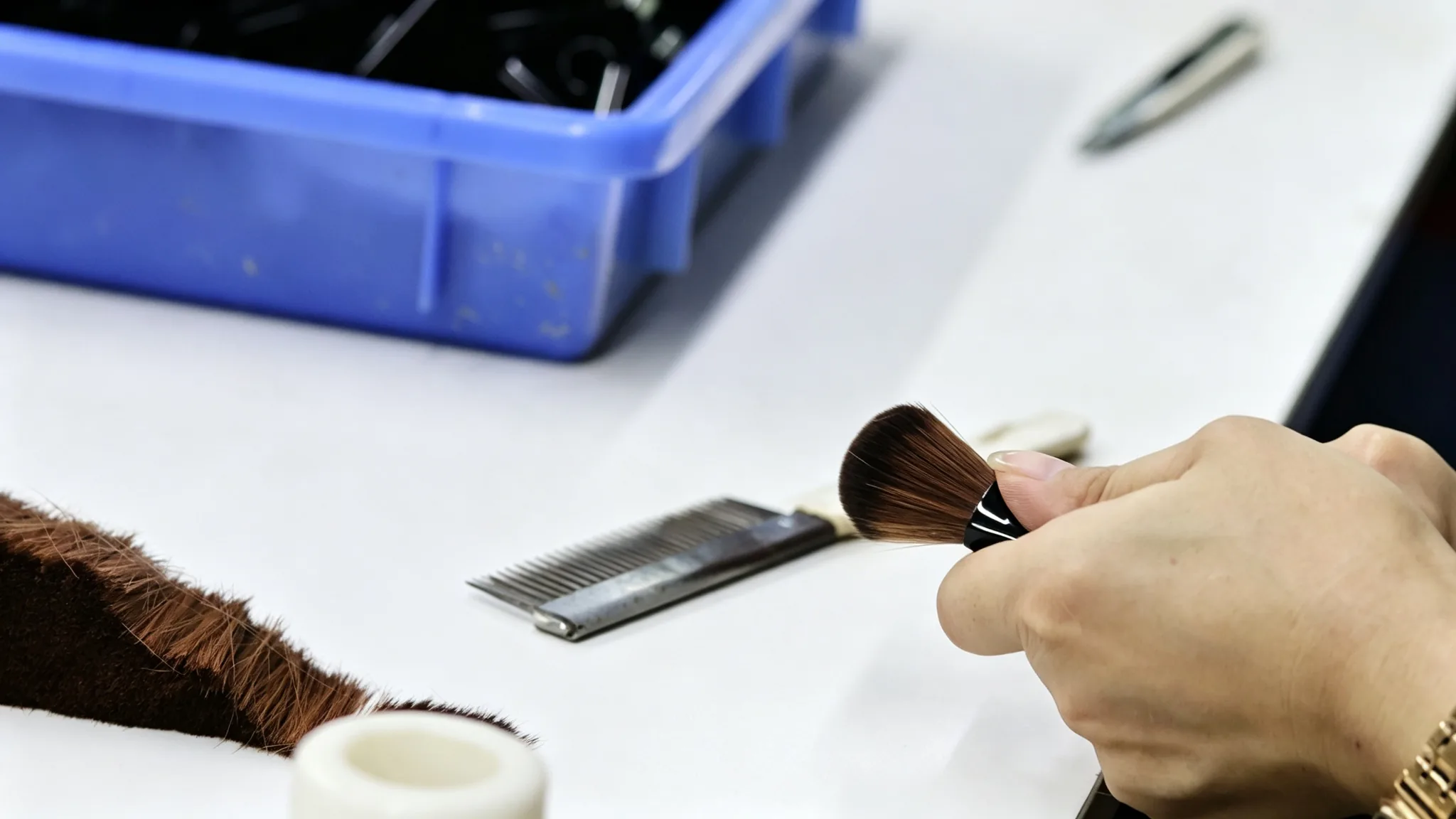
The bristles you choose, the handle material and the way a brush is assembled account for around eighty percent of its cost, feel and service life. This guide looks at each of these three elements.
1. Bristle Materials: Natural Hair and Synthetic Fibers
Bristles are the soul of a makeup brush and the largest source of cost differences. A useful starting point is to pair natural hair with powder products for pickup and soft blending, and synthetic fibers with liquids and creams because they absorb less product and are easier to clean. Then consider the properties of each hair type.
Common natural hair types
| Hair type | Softness | Powder pickup | Resilience | Cost | Typical uses |
|---|---|---|---|---|---|
| Squirrel | ★★★★★ Very soft | Medium | Low | High | Powder, blush and highlight; a light sweeping finish |
| Sable | ★★★★ | Strong | Strong | High | Eyeshadow application and precision eye brushes |
| Goat | ★★★ | Strong | Medium | Medium | An all-round choice for powder, blush and contour |
| Pony | ★★ | Strong | Relatively strong | Low–medium | Eyeshadow, brow brushes and applications needing spring |
| Badger | ★★★ | Strong | Strong | Medium | Brow and powder brushes |
Synthetic fibers: from PBT to blended bristles
PBT (polybutylene terephthalate) and modified nylon are common synthetic bristle materials. Tapered fibers can imitate the fine tips of natural hair, giving a similar feel while retaining low liquid absorption, quick drying and an animal-free composition. Blends made mainly from synthetic fibers with a small amount of goat or squirrel hair balance powder pickup and softness and can offer good value in brush sets.
Natural hair
- A cuticle structure helps distribute powder evenly and blend naturally.
- Suited to powder products and a soft, airy finish.
- Needs gentle cleaning; avoid hot water and direct, intense sunlight.
- Price varies with the hair type and the condition of its natural tips.
Synthetic fibers
- A smooth cylindrical surface absorbs less liquid foundation and cream.
- Suited to liquid and cream products, with strong coverage.
- Quick drying and resistant to washing; suitable for high-temperature disinfection.
- Animal-free fibers support a cruelty-free, vegan product positioning.
Under magnification, squirrel and goat hair have a surface covered in scales, while PBT fibers have a smoother surface. This microscopic structure helps explain why different bristles perform differently with powders and liquids.
2. Handle Materials: The Balance of Feel and Cost
The handle shapes a brush’s appearance, the temperature and feel in your hand, and the way it looks on a dressing table. Five common choices are compared below.
| Material | Feel and appearance | Cost | Environmental characteristics | Common finishes |
|---|---|---|---|---|
| Wood | Warm, natural grain; a mid-to-premium feel | Medium–high | Biodegradable wood options include beech, maple and ebony | Matte paint, baked coating, polished natural wood |
| Bamboo | Lightweight, fresh grain and a natural look | Medium | Fast-growing and biodegradable material | Carbonized color, clear coating, natural finish |
| Metal: aluminum, copper or stainless steel | Cool, solid and professional | High | Recyclable | Anodizing, plating, brushed finish |
| Acrylic (PMMA) | Transparent, colorful and visually expressive | Medium | Not biodegradable | Injection molding, translucent color, pearlescent finish |
| ABS/PP plastic | Lightweight, many colors, low cost | Low | Limited recyclability in practice | Injection molding, paint, soft-touch overmolding |
Recent European preferences include demand for bamboo and recyclable aluminum handles in collections positioned around sustainability, while transparent acrylic handles appeal to younger customers looking for a distinctive appearance.
3. Manufacturing: Seven Key Stages
From raw materials to the finished product, a makeup brush passes through the following stages. The workmanship at each stage contributes directly to its final quality.
Brush-head shaping
Bristles are cut and shaped into flat, round, angled or other profiles. Sorting removes stray and short hairs.
Preparing the ferrule
The aluminum ferrule is prepared with accurately sized openings and adhesive. The opening and depth must match the bristle bundle to support a secure fit.
Bristle insertion
A measured bundle is pressed into the ferrule. Equipment controls the amount and arrangement of hair; even density is essential.
Ferrule crimping
A die crimps the aluminum ferrule to hold the bristle bundle firmly. This stage affects whether the head loosens or sheds.
Assembly
The bristled ferrule is joined to the handle with adhesive or mechanical fixing. Higher-end brushes may receive additional reinforcement and joint finishing.
Surface finishing
Handles receive paint, anodizing or a laser-engraved logo. Wooden handles may be sanded and waxed; metal handles may be plated and polished.
Inspection and packaging
Brushes are checked individually for shedding, adhesive failure and visible defects, then packed in the agreed cartons, brush rolls or fabric pouches.
A practical tip for buyers: when evaluating a factory, begin with bristle-density consistency, the tightness of the crimp and the adhesion of the painted finish. These three stages provide a useful indication of overall workmanship.