



A Guide to the Makeup Brush Industry: Types, Trends & Quality
Published: 路 XIANCAI
Understand how the brush industry works, compare face and eye brush types, and learn four practical checks for product quality.
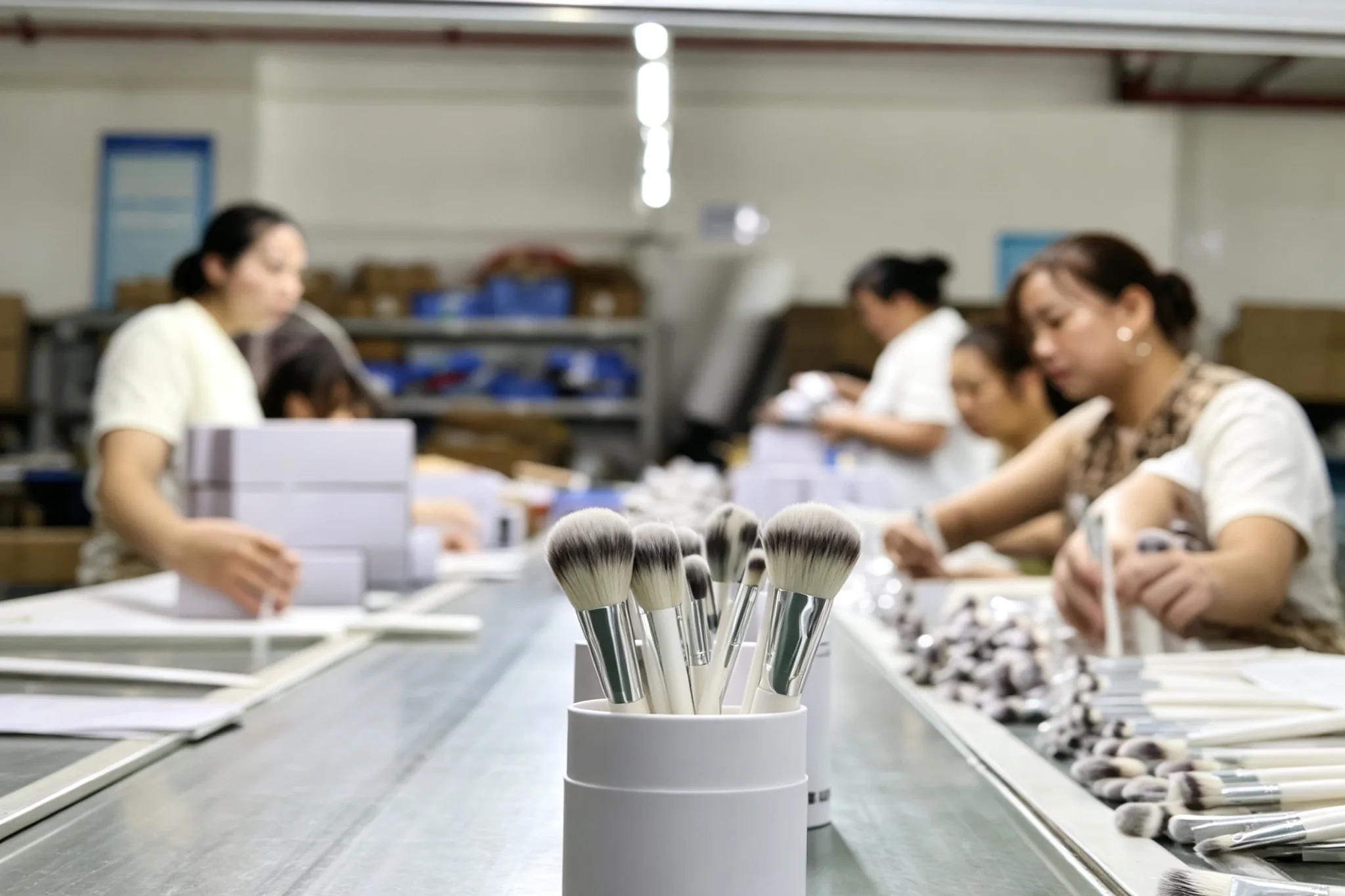
Makeup brushes depend on the relationship between structure, materials and workmanship. This guide maps out the industry: its origins, product categories, market direction and the details to check when buying.
1. Industry Background: From Workshops to Global Supply Chains
The history of makeup brushes reaches back to twentieth-century makeup studios. Early brushes were made by hand: artisans selected animal hair, tied it into bundles and fitted handles. Production was limited and prices were high, serving professional makeup artists and premium brands. As makeup became more widely used, brush production became industrialized, with established stages for material sourcing, brush-head processing, assembly and packaging.
Today, much of global makeup-brush manufacturing is concentrated in China. The Yangtze River Delta, particularly Jiangsu and Zhejiang, and the Pearl River Delta have many factories with complete production capabilities. Bristle insertion, aluminum-ferrule crimping, painting, laser engraving and packaging printing can take place within the same industrial area. This helps make small-batch customization and rapid sampling more accessible: even a 500-piece order can receive process support similar to a larger production run.
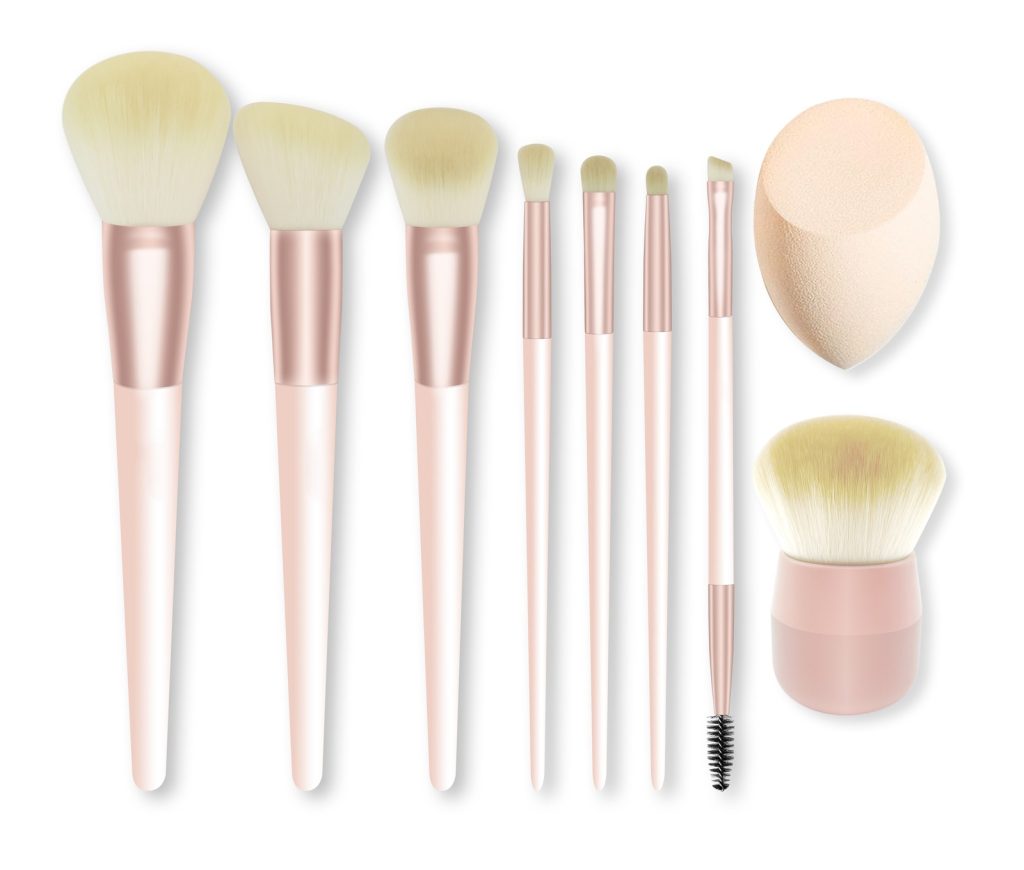
In the European market, brushes are often sold in sets of 5, 6, 10 or 20. Individual retail prices range from a few euros to several dozen euros. The set composition, color palette and packaging are often key factors in the final retail price.
Three essentials to remember: bristles are central to cost; handles are central to feel; workmanship is central to quality.
2. Classification: How Makeup Brushes Are Grouped
Two common ways to classify brushes are the application area—face, eyes or lips—and the shape of the head, such as flat, round, angled, fan-shaped or tapered. Together, these provide a practical framework for selecting products.
Face brushes
| Brush | Head profile | Suitable products | Common bristle choices |
|---|---|---|---|
| Foundation | Flat or round, densely packed | Liquid or cream foundation, BB cream | Synthetic: low absorption, easy cleaning |
| Powder | Large and fluffy | Loose and setting powder | Goat or soft synthetic fibers |
| Blush | Medium, rounded taper | Powder or cream blush | Goat, squirrel or synthetic |
| Contour | Angled and fairly dense | Contour powder and bronzer | Goat or pony hair for resilience |
| Highlight | Fan or small taper | Highlighter and shimmer | Squirrel or synthetic for a light application |
| Concealer | Small, flat and firm | Cream or liquid concealer | Synthetic |
Eye brushes
| Brush | Head profile | Use |
|---|---|---|
| Shader | Large and flat | Apply base shadow across the lid |
| Blending | Fluffy and rounded | Soften eyeshadow edges |
| Detail | Small and flat | Precise outer-corner and lower-lid color |
| Eyeliner | Fine and pointed | Draw lines with gel liner |
| Brow | Angled and firm | Fill and shape brows with powder |
| Spoolie | Spiral head | Groom brows and remove excess powder |
Lip brushes and other tools
Lip brushes have a small flat or pointed head for defining the lip shape and applying lip color. Other tools include angled brow brushes and cleaning brushes. However unusual a brush looks, its function comes from the combination of its head shape and bristle properties.
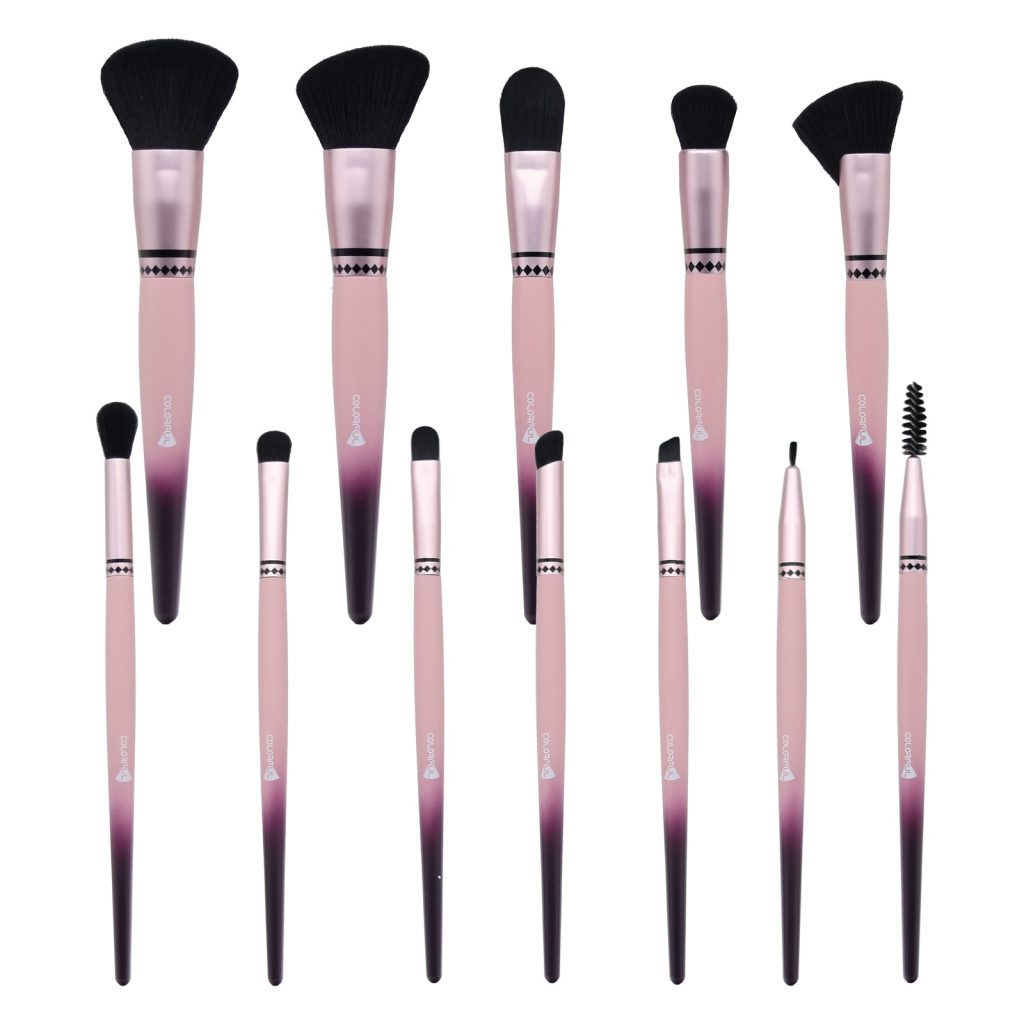
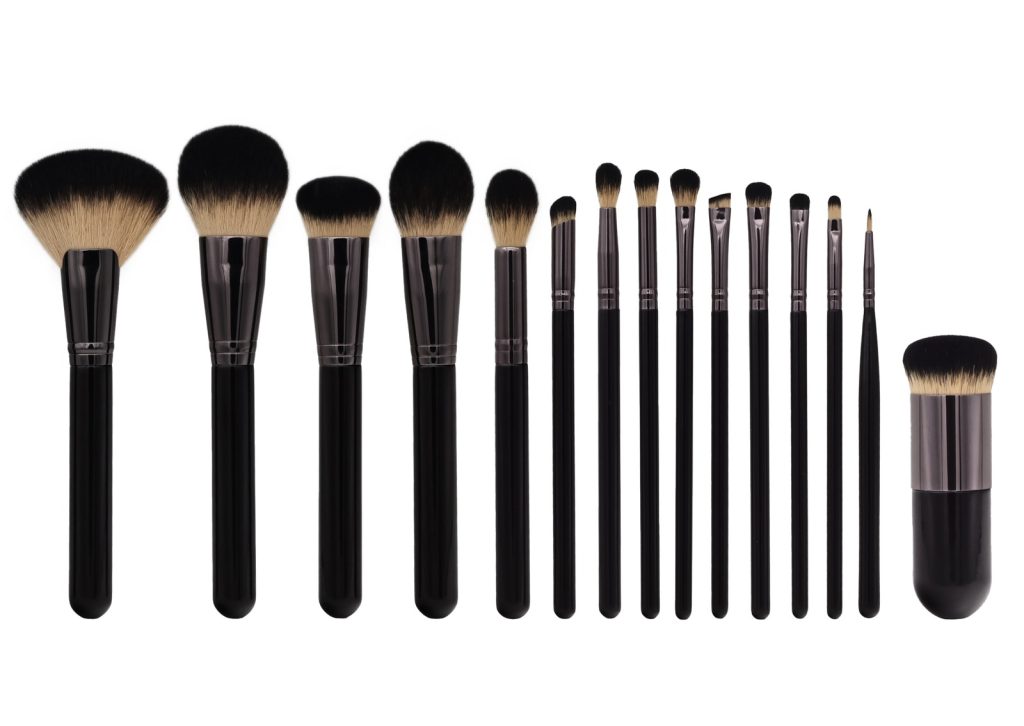
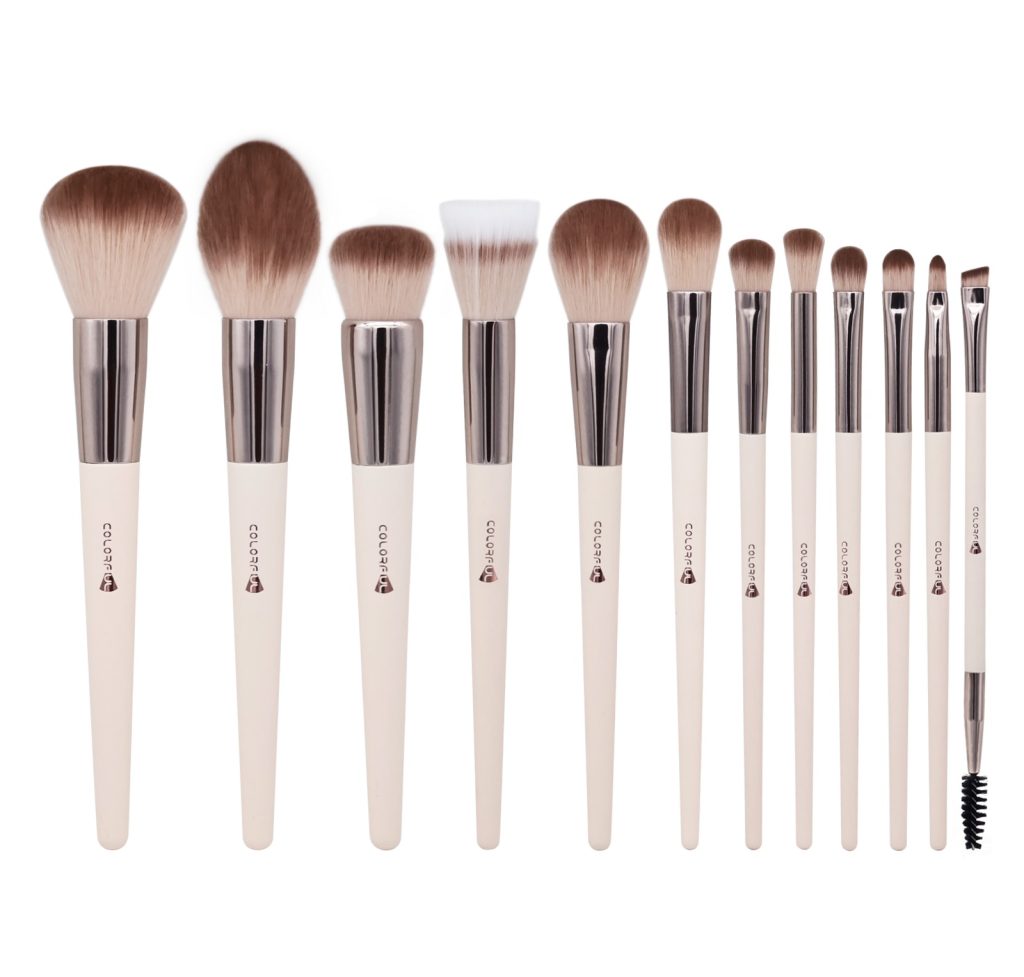
Six familiar profiles are the flat-top foundation brush, round powder brush, tapered blush brush, angled contour brush, fan highlighter and small flat concealer brush.
3. Four Market Trends to Watch in 2026
Sustainability and vegan bristles
European customers are paying more attention to animal hair, and demand for high-performance synthetic fibers such as PBT is growing. Premium positioning is increasingly associated with cruelty-free brushes and biodegradable handles in direct-to-consumer channels.
Specialist and multifunctional brushes
Concealer brushes are becoming more specialized for spot coverage or wider areas, while some blush brushes combine blush and contour functions. Brands use these distinctions to build a professional identity and increase average order value.
Small batches and flexible customization
Influencer-led and startup brands often test the market with batches of 500–1,000 brushes before placing repeat orders. Flexible production capability is an important factor when choosing a manufacturing partner.
Direct-to-consumer websites and gift sets
Selling directly to customers has made the combination of a coordinated set, gift packaging and product-focused content increasingly important. Packaging design has a growing influence on conversion.
4. Four Checks for Assessing Brush Quality
The same principles apply whether you are buying for yourself or selecting products for a brand.
- Check the bristles. For synthetic hair, assess softness and spring. For natural hair, inspect whether the tips are intact. Sweep the brush gently over the back of your hand; scratchiness or shedding is a warning sign.
- Check the density. Hold the head toward a light source. The roots should be closely arranged without obvious gaps. Density affects even powder pickup.
- Check the crimp and connections. The ferrule, handle and head should fit tightly without movement when gently tested. Loose crimping is a common problem with low-quality brushes.
- Check the overall feel. The balance should sit comfortably in the hand for longer use. Paint or coatings should be even and free of bubbles.
If you are unsure, start with a set and add individual upgrades. Build your basic routine first, then invest in a better version of the foundation or blending brush you use most.